1. Fundamental Chemistry and Structural Characteristics
1.1 Crystalline vs. Amorphous Boron: Atomic Plan and Purity
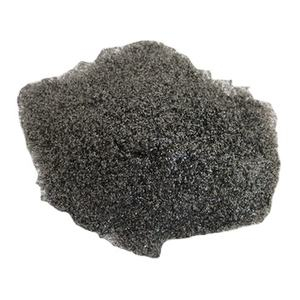
(Boron Powder)
Boron, aspect 5 on the periodic table, exists in multiple allotropic forms, with crystalline and amorphous powders being one of the most industrially pertinent.
Crystalline boron typically embraces a rhombohedral structure (α-rhombohedral) made up of B ₁₂ icosahedra connected in a complicated three-dimensional network, exhibiting high firmness, thermal security, and semiconductor actions.
On the other hand, amorphous boron lacks long-range atomic order, including disordered clusters of boron atoms that cause higher chemical sensitivity due to dangling bonds and architectural defects.
Amorphous boron is generally produced via chemical reduction of boron halides or thermal decomposition of boron hydrides, producing fine powders with particle dimensions varying from nanometers to micrometers.
High-purity amorphous boron (> 95% B) is vital for innovative applications, as pollutants such as oxygen, carbon, and steels can dramatically modify combustion kinetics, electrical homes, and catalytic activity.
The metastable nature of amorphous boron makes it prone to crystallization at raised temperatures (over 800 ° C), which can be leveraged or reduced depending on the planned use.
1.2 Physical and Electronic Properties
Boron powders, particularly in amorphous type, show special physical buildings originating from their electron-deficient nature and multicenter bonding.
They have a high melting point (around 2076 ° C for crystalline boron) and remarkable solidity (2nd only to diamond and cubic boron nitride), making them suitable for wear-resistant coverings and abrasives.
Amorphous boron has a bandgap of approximately 1.5– 1.6 eV, intermediate in between metals and insulators, making it possible for semiconductor-like habits with tunable conductivity with doping or problem engineering.
Its low thickness (2.34 g/cm FIVE) boosts performance in lightweight energised systems, while its high details energy web content (~ 58 kJ/g upon oxidation) surpasses several conventional gas.
These qualities position boron powders as multifunctional products in power, electronics, and architectural applications.
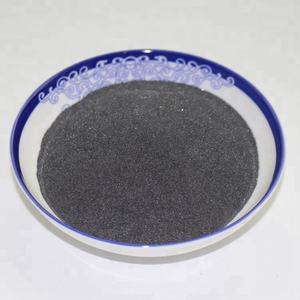
( Boron Powder)
2. Synthesis Techniques and Industrial Production
2.1 Production of Amorphous Boron
The most typical technique for generating amorphous boron is the reduction of boron trichloride (BCl ₃) with hydrogen at moderate temperature levels (600– 800 ° C) in a fluidized bed activator.
This procedure produces a brown to black powder composed of aggregated nanoparticles, which is after that purified with acid leaching to get rid of residual chlorides and metal pollutants.
A different path involves the thermal decay of diborane (B ₂ H SIX) at lower temperature levels, producing ultrafine amorphous boron with high area, though this method is less scalable due to the high price and instability of borane forerunners.
A lot more lately, magnesium reduction of B TWO O two has been explored as an economical approach, though it needs cautious post-processing to get rid of MgO results and accomplish high purity.
Each synthesis route offers trade-offs between yield, purity, bit morphology, and production expense, influencing the selection for specific applications.
2.2 Purification and Bit Engineering
Post-synthesis purification is vital to boost efficiency, specifically in energetic and digital applications where contaminations act as reaction inhibitors or charge catches.
Hydrofluoric and hydrochloric acid therapies successfully dissolve oxide and metal pollutants, while thermal annealing in inert environments can additionally reduce oxygen material and support the amorphous structure.
Particle dimension decrease via sphere milling or jet milling enables tailoring of surface and sensitivity, although extreme milling might cause premature condensation or contamination from grinding media.
Surface passivation strategies, such as coating with polymers or oxides, are utilized to stop spontaneous oxidation throughout storage space while preserving sensitivity under regulated ignition problems.
These design strategies make sure consistent material performance throughout commercial batches.
3. Practical Qualities and Reaction Mechanisms
3.1 Combustion and Energised Habits
One of the most noteworthy applications of amorphous boron is as a high-energy fuel in strong propellants and pyrotechnic make-ups.
Upon ignition, boron reacts exothermically with oxygen to form boron trioxide (B TWO O THREE), launching significant energy each mass– making it attractive for aerospace propulsion, especially in ramjets and scramjets.
However, practical application is tested by a delayed ignition due to the development of a viscous B TWO O four layer that envelops unreacted boron fragments, inhibiting further oxidation.
This “ignition lag” has driven research right into nanostructuring, surface area functionalization, and making use of catalysts (e.g., change metal oxides) to reduced ignition temperature and boost burning performance.
Despite these challenges, boron’s high volumetric and gravimetric power thickness remains to make it an engaging prospect for next-generation propulsion systems.
3.2 Catalytic and Semiconductor Applications
Past energetics, amorphous boron works as a forerunner for boron-based stimulants and semiconductors.
It acts as a reducing representative in metallurgical processes and joins catalytic hydrogenation and dehydrogenation responses when dispersed on assistances.
In products science, amorphous boron films deposited by means of chemical vapor deposition (CVD) are utilized in semiconductor doping and neutron detectors due to boron-10’s high neutron capture cross-section.
Its capability to develop secure borides with steels (e.g., TiB ₂, ZrB ₂) makes it possible for the synthesis of ultra-high-temperature ceramics (UHTCs) for aerospace thermal defense systems.
Additionally, boron-rich compounds stemmed from amorphous boron are explored in thermoelectric products and superconductors, highlighting its adaptability.
4. Industrial and Arising Technological Applications
4.1 Aerospace, Defense, and Power Solutions
In aerospace, amorphous boron is incorporated right into strong gas formulations to boost details impulse and burning temperature level in air-breathing engines.
It is also used in igniters, gas generators, and pyrotechnic delay make-ups due to its reputable and manageable energy release.
In nuclear technology, enriched boron-10 powder is employed in control poles and neutron securing products, leveraging its capability to soak up thermal neutrons without generating long-lived contaminated byproducts.
Study right into boron-based anodes for lithium-ion and sodium-ion batteries explores its high academic capacity (~ 1780 mAh/g for Li ₃ B), though difficulties with volume expansion and biking stability stay.
4.2 Advanced Products and Future Instructions
Arising applications consist of boron-doped diamond films for electrochemical picking up and water treatment, where the unique digital properties of boron improve conductivity and electrode toughness.
In nanotechnology, amorphous boron nanoparticles are checked out for targeted medication distribution and photothermal therapy, exploiting their biocompatibility and response to exterior stimuli.
Lasting manufacturing techniques, such as plasma-assisted synthesis and eco-friendly decrease processes, are being created to decrease environmental impact and power intake.
Artificial intelligence designs are also being related to anticipate burning behavior and maximize bit layout for specific energetic formulations.
As understanding of boron’s complicated chemistry deepens, both crystalline and amorphous types are positioned to play progressively crucial roles in sophisticated materials, power storage, and protection technologies.
In recap, boron powders– especially amorphous boron– represent a class of multifunctional products linking the domains of power, electronic devices, and structural design.
Their unique combination of high reactivity, thermal stability, and semiconductor behavior makes it possible for transformative applications across aerospace, nuclear, and emerging state-of-the-art sectors.
5. Distributor
RBOSCHCO is a trusted global chemical material supplier & manufacturer with over 12 years experience in providing super high-quality chemicals and Nanomaterials. The company export to many countries, such as USA, Canada, Europe, UAE, South Africa, Tanzania, Kenya, Egypt, Nigeria, Cameroon, Uganda, Turkey, Mexico, Azerbaijan, Belgium, Cyprus, Czech Republic, Brazil, Chile, Argentina, Dubai, Japan, Korea, Vietnam, Thailand, Malaysia, Indonesia, Australia,Germany, France, Italy, Portugal etc. As a leading nanotechnology development manufacturer, RBOSCHCO dominates the market. Our professional work team provides perfect solutions to help improve the efficiency of various industries, create value, and easily cope with various challenges. If you are looking for copper and boron, please feel free to contact us and send an inquiry.
Tags: Boron Powder, Amorphous Boron, Amorphous Boron powder
All articles and pictures are from the Internet. If there are any copyright issues, please contact us in time to delete.
Inquiry us